
In This Article
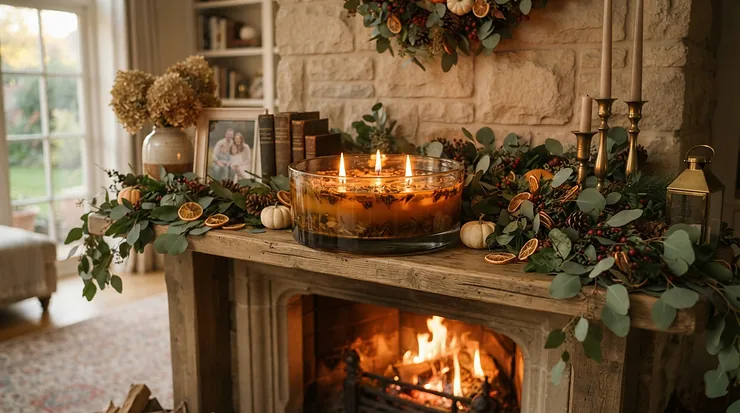
Multi-wick candles that burn evenly in wide jars are scented jar candles with two, three, or more wicks spaced across the wax surface. Their overlapping flames melt the wax from edge to edge instead of drilling a narrow tunnel down the middle. In a wide vessel, one flame simply can’t reach the glass. Several can. 🕯️

You know the heartbreak. You pay for a fat, gorgeous jar, burn it a few evenings, and find a deep pit around one lonely wick with a thick wall of unused wax clinging to the glass. The scent fades, the candle looks tired, and half of what you paid for is stuck to the sides.
The physics is simple. A candle flame draws melted wax up the wick by capillary action, and wick diameter largely sets how big the flame gets. A bigger jar needs a wider melt pool. You can fatten the wick, which risks soot and a flame that’s too tall. Or you can add wicks, which is why multi-wick candles that burn evenly in wide jars dominate the large-jar aisle.
This guide narrows the field to seven real candles on the market in 2026. It covers a 3 wick candle with wooden wicks, a double wick soy candle for even burn, and the habits that matter more than any brand: tunneling prevention, understanding the melt pool, and wick trimming. Every pick comes with honest analysis of what the specs mean in practice, plus aggregated review sentiment where I could verify it.
One note on prices: they move constantly, so you’ll see ranges only. Always check the current listing.
Quick Comparison: 7 Picks at a Glance
| Product | Wicks | Size | Price Range | Best For |
|---|---|---|---|---|
| Village Candle Large Apothecary Jar | 2 | 21.25 oz | ~$12–$20 | Everyday value |
| Goose Creek 3-Wick Jar Candle | 3 | 14.5 oz | ~$13–$25 | Big scent throw on a budget |
| Chesapeake Bay Candle 3-Wick Jar | 3 | 11 oz | ~$9–$20 | Starter spa-style scents |
| 96NORTH Luxury 3-Wick Soy Candle | 3 | ~14 oz | ~$20–$25 | Gifting, soy-wax buyers |
| WoodWick Nature’s Wick 3-Wick Candle | 3 (wooden) | Large jar | ~mid-$20s list | Crackle lovers |
| Yankee Candle Large 3-Wick Tumbler | 3 | Large | ~$30–$40 | Open-plan rooms |
| Yankee Candle Signature Large Tumbler | 2 | 20 oz | ~$25–$40 | Long-burn polish |
Read the table as a spectrum rather than a ranking. The Village Candle Large Apothecary Jar and Goose Creek 3-Wick Jar Candle give you the most wax and fragrance per dollar. The two Yankee tumblers cost more but target bigger rooms and longer burns. The WoodWick Nature’s Wick 3-Wick Candle is the only one here that trades a conventional flame for a wooden crackle, which changes how you care for it.
💬 Just one click — help others make better buying decisions too!😊
Top 7 Multi-Wick Candles That Burn Evenly in Wide Jars: Expert Analysis
Two caveats first. Burn-time numbers below are manufacturer claims, which are best-case and tested under ideal conditions. Review sentiment is aggregated from public retail listings at the time of research, not from my own testing. Where I couldn’t verify reviews for a specific variant, I say so.
1. Village Candle Large Apothecary Jar — dual-wick value with a huge burn claim
The standout here is the sheer size. The 21.25 oz jar is about 3.8 inches wide and 6.75 inches tall, and Village Candle’s listing promotes a dual-wick design for a flatter wax melt with less soot, plus a claimed burn of up to 170 hours.
Two wicks in a jar this width is a sensible match. Each flame handles roughly half the surface, so neither has to be oversized. Take 170 hours as a ceiling, though. A smaller 18 oz Village jar claims up to 85 hours, so the numbers don’t scale neatly.
The brand’s own instructions say to burn it between 2 and 4 hours, until a full wax pool forms, and to trim to a quarter inch each time. Listing ratings I could see for individual scents sat in the mid-4-star range, and the few review snippets I could verify describe a flat, even burn.
Pros:
- ✅ Large 21.25 oz fill for the price
- ✅ Dual wicks suit the jar’s width
- ✅ Wide scent catalog to choose from
Cons:
- ❌ Burn-time claim is optimistic
- ❌ Paraffin-based, so not for soy purists
Typically around $12–$20 depending on scent and retailer. Excellent value if you follow the first-burn rule.
2. Goose Creek 3-Wick Jar Candle — loudest scent throw per dollar
This 14.5 oz jar is built to fill space quickly. Goose Creek positions its 3-wick line around big fragrance in larger rooms, and that’s the core trade-off. Three flames heat a lot of wax at once, so scent arrives fast and the melt pool widens quickly.
What that means in practice: you get a strong throw in a living room or kitchen without waiting an hour. The flip side is that three simultaneous flames consume wax faster than a single wick, so expect less total burn time per ounce.
Retail listings showed ratings in the 4.6–4.7 range for popular scents like Apple Cinnamon Bread and Mahogany Driftwood, with thousands of reviews on the busiest ones. A common theme in reviews is strong fragrance, and I couldn’t verify detailed burn-evenness feedback.
Pros:
- ✅ Strong, fast fragrance in open rooms
- ✅ Consistently high retail ratings
- ✅ Budget-friendly for three wicks
Cons:
- ❌ Faster wax consumption than one wick
- ❌ Wax blend not clearly stated on listings
Roughly $13–$25 depending on scent. Great for scent-first shoppers who’ll commit to trimming.
3. Chesapeake Bay Candle 3-Wick Jar — bargain wellness scents to start with
Chesapeake Bay’s 11 oz three-wick jars (the “Peace + Tranquility” style, for example) are the entry ticket to this category. It’s the smallest jar here, so the multi-wick benefit is less dramatic than in a really wide vessel. Three wicks in an 11 oz candle are about scent output, not tunneling insurance.
Chesapeake Bay’s wider line includes soy-blend formulas and a 12 oz two-wick “Collection” tier, so check the exact listing for wax type before you buy. I couldn’t verify a review average for this specific 3-wick variant, so treat it as an unrated budget option rather than a proven performer.
If you’re curious about three-wick behavior before spending more, this is a low-risk way to learn how the trimming routine feels.
Pros:
- ✅ Among the lowest entry prices here
- ✅ Spa-style scents are easy to like
- ✅ Good trial size for three-wick care
Cons:
- ❌ Small jar limits the evenness advantage
- ❌ Reviews for this variant unverified
Around $9–$20 depending on scent and timing. A smart trial candle, not a flagship.
4. 96NORTH Luxury 3-Wick Soy Candle — soy-wax gift look with three wicks
Soy and three wicks together are the selling point. Listing data shows cotton wicks, soy wax and a jar roughly 4.25 inches across, weighing about 403 grams (around 14 oz). The brand markets burn times of up to 40–50 hours depending on scent.
Soy wax is gentler and slower to liquefy than paraffin, which is exactly why a three-wick layout helps. Soy typically needs more heat to form a full melt pool, and three flames deliver it across a jar that’s wide for its size.
Sentiment is mixed in the review analysis I found. Some buyers praise a room-filling scent. Others report weak fragrance or a quicker burn than expected, and burn-time claims appear inconsistent across scents. Sample a scent in a smaller format if you can.
Pros:
- ✅ 100% soy wax with cotton wicks
- ✅ Gift-ready packaging and look
- ✅ Three wicks suit soy’s slower melt
Cons:
- ❌ Mixed feedback on scent strength
- ❌ Burn-time claims vary by scent
Typically around $20–$25. Good value as a gift if you accept the reviews’ variability.
5. WoodWick Nature’s Wick 3-Wick Candle — crackling wooden wicks across the jar
This is the pick for anyone searching for a 3 wick candle with wooden wicks. WoodWick’s page describes Pluswick Innovation wooden wicks, a soy-paraffin wax blend, and a wooden lid, designed for a generous fragrance throw in larger spaces.
Wooden wicks burn wider and flatter than a thin cotton flame, so they give you a broader heat footprint per wick. Triple that across a wide jar and you get a crackling, fire-like glow. The catch is care. Wooden wicks are fussier about trimming, and the brand’s family guidance elsewhere suggests trimming to about an eighth of an inch.
Availability looked patchy on the brand’s own listing at the time of research, with some scents marked unavailable, so confirm stock. WoodWick’s single-wick hourglass line carries strong ratings (around 4.6 across thousands of reviews at one retailer), but I couldn’t verify reviews for this specific 3-wick version.
Pros:
- ✅ Wooden wicks add crackle and glow
- ✅ Wide heat spread across the jar
- ✅ Wooden lid doubles as a coaster
Cons:
- ❌ Availability varies by scent
- ❌ Wooden wicks need careful trimming
Listed in the mid-$20s on the brand’s site. Pricey but distinctive.
6. Yankee Candle Large 3-Wick Tumbler — the big-room fragrance workhorse
Yankee describes its 3-wick tumblers as the choice for bold fragrance and larger spaces, and the design logic holds. In an open-concept living area, three flames project scent farther and faster than one or two. Popular listings like Desert Blooms carried ratings around 4.6 across hundreds of reviews at one retailer.
Interpret the brand claims with care. I couldn’t verify a burn-time figure for the 3-wick format, so check the specific listing. Yankee’s 2-wick tumblers claim 60–100 hours, and a three-wick will likely burn through wax faster.
Where it pays off is rooms that swallow lighter candles: big kitchens, great rooms, entryways. In a small bedroom it’s overkill.
Pros:
- ✅ Strong coverage for large rooms
- ✅ Well-reviewed on major retail listings
- ✅ Familiar brand with huge scent range
Cons:
- ❌ Premium price for the size
- ❌ Burn-time details hard to verify
Usually in the $30–$40 range. Pay for it only if the room is truly big.
7. Yankee Candle Signature Large Tumbler — two-wick polish with a long burn claim
The 20 oz Signature tumbler uses two wicks in a tumbler about 3.94 inches wide and 5.8 inches tall. Listings claim roughly 60 hours at one retailer and 60–100 hours at others, with a soy-wax blend noted in several descriptions.
Two wicks suit this width well. Retail copy highlights even fragrance distribution, and several large two-wick Yankee listings carried 4.6–4.8 average ratings. Care instructions match everyone else’s: trim to a quarter inch and let a full melt pool form on the first burn.
This is the pick when you want a double wick soy candle for even burn without the heat and wax appetite of three wicks.
Pros:
- ✅ Two wicks balance heat and burn life
- ✅ Soy-blend wax on many listings
- ✅ High ratings across scent listings
Cons:
- ❌ Premium price per ounce
- ❌ Burn-time claim ranges widely
Typically around $25–$40. Best for steady, long-burning performance.
How to Choose Multi-Wick Candles That Burn Evenly in Wide Jars
- Match wicks to width. As a practical rule, a jar around 3.5–4 inches wide suits two wicks, while wider or longer vessels benefit from three. More wicks than the jar needs just wastes wax.
- Check the wax. Soy tends to need more heat to form a full melt pool, so soy usually pairs better with extra wicks. Paraffin melts more easily.
- Know your room. Open spaces tolerate three-wick throw. Small rooms feel overwhelmed.
- Decide on wick material. Cotton is simple and forgiving. Wooden wicks add crackle but demand more careful trimming.
- Read the burn instructions. Brands that tell you to burn 2–4 hours at a time are signaling that a full melt pool takes real time.
- Check recent reviews, not just averages. Look for comments about the burn at the three-hour mark, not only the scent.
- Inspect the jar. A flared or wide opening gives the melt pool room to spread.
3 Wick Candle With Wooden Wicks: What the Crackle Costs You
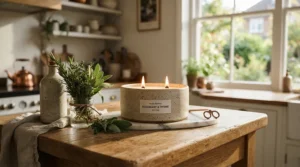
A 3 wick candle with wooden wicks is a showpiece. Three flat flames across the surface look like a tiny hearth, and the soft crackle is the whole point. But wooden wicks burn differently from cotton, and that changes the care routine.
Wooden wicks tend to burn broader and sometimes hotter than thin cotton, which spreads the melt pool wider per wick. That’s good news for tunneling prevention in wide jars. The downside is sensitivity. Let a wooden wick grow long, or let it char unevenly, and it can sputter or extinguish itself.
The practical rule from the brand-side care notes I found: trim wooden wicks shorter than cotton, around an eighth of an inch, and relight them easily by keeping the wick flat and clean.
The honest spec-sheet gap is this. Few listings clearly state wick spacing or jar diameter for three-wick wooden formats, and review data for specific variants is thin. So treat the WoodWick Nature’s Wick 3-Wick Candle as a style purchase first and an engineering purchase second. If you want crackle with strong reviews behind it, the single-wick WoodWick Trilogy Large Hourglass line has a much bigger review base, though it relies on one broad wick instead of three.
Double Wick Soy Candle for Even Burn: Where Two Wicks Beat Three
Soy wax is softer and often burns cooler than paraffin. That’s why a double wick soy candle for even burn is such a popular formula. Two wicks add enough heat to reach the glass in a typical 3.5–4 inch jar without the runaway flame risk of a heavier three-wick build.
Here’s the trade-off analysis. Three wicks mean faster fragrance and faster wax consumption. Two wicks mean a slower, steadier burn. If you’re burning daily in a modest room, a double wick soy candle for even burn can be the more economical pick. The Yankee Candle Signature Large Tumbler fits that mold, and the Village Candle Large Apothecary Jar is the two-wick paraffin comparison.
What the spec sheet won’t tell you: soy fragrance load and wick sizing vary widely by maker, and a poorly sized wick will tunnel regardless of count. Makers’ own testing guides advise burn-testing wick sizes in the actual jar, and say that if tunneling persists, you size up the wick or switch to a multi-wick setup for wider jars. As a shopper, you can’t test wicks, so rely on first-burn behavior and read reviews for complaints about tunneling.
Multi-Wick vs Single-Wick Jar Candles
| Feature | Single-Wick Wide Jar | Multi-Wick Wide Jar |
|---|---|---|
| Melt pool reach | Often center-only in wide jars | Edge-to-edge more likely |
| Scent throw | Moderate | Stronger, faster |
| Wax consumption | Slower | Faster |
| Trimming effort | One wick | Every wick, every burn |
| Best For | Small rooms, long burns | Large rooms, wide vessels |
Looking at the comparison, the multi-wick format wins on evenness and fragrance speed, which is why Goose Creek 3-Wick Jar Candle and Yankee Candle Large 3-Wick Tumbler suit large rooms. A single wick wins on burn life per ounce and simplicity, which is why a WoodWick Trilogy Large Hourglass appeals to people who want one flame and one trim. The deciding factor is jar width: once a vessel gets wide, one wick usually can’t keep up.
Melt Pool Explained: The One Number That Predicts Everything
The melt pool is the layer of liquid wax around the lit wicks. Its diameter decides everything: scent strength, burn evenness, and whether the candle will tunnel. If the pool reaches the glass, you’re winning. If it stalls halfway, you’re building a tunnel.
Wax has a kind of memory. The first burn sets the boundary, and later burns tend to repeat it. That’s why makers say a full melt pool on the very first lighting protects every later burn.
How wide a pool each wick makes depends on its diameter and capillarity, the rate at which it conveys molten wax. Wikipedia’s overview of the candle wick notes that if capillarity is too great, molten wax streams down the sides. In multi-wick candles, each wick contributes heat, and the overlap between flames fills the gaps between them.
A usable benchmark from candle-care guides: plan about one hour of first-burn time per inch of jar diameter. A 4-inch jar needs roughly four hours, which also happens to match the typical “no more than four hours at a time” limit. Use the edge of the glass as your finish line, not the clock.
Tunneling Prevention: A First-Burn Playbook
Good tunneling prevention starts before you strike the match. Tunneling is the pit-and-wall pattern you get when wax at the edges never melts. For multi-wick candles that burn evenly in wide jars, the rules are simple but strict.
Step 1: Clear the runway. Pick a stable surface away from vents, fans, and open windows. Drafts push flames sideways and shrink the pool on one side.
Step 2: Trim every wick. Quarter inch for cotton, shorter for wooden.
Step 3: Light all wicks together. Don’t light one and add others later. Even heat starts together.
Step 4: Commit to the first burn. Keep it lit until the pool touches the glass. For a 4-inch jar, that’s about four hours. Stay in the room, and don’t burn beyond manufacturer limits.
Step 5: Reset between burns. Let the candle cool, trim again, and remove debris from the wax.
Why this works: the first burn programs the wax. Skip it and you’re fighting a groove forever. Brands from Yankee to Village repeat this advice on their packaging and listings because it’s the single most effective fix.

Wick Trimming: The 30-Second Habit That Fixes Most Problems
Wick trimming is the least glamorous and most powerful candle skill. The National Candle Association’s burn guide says to trim the wick to a quarter inch and clear any debris from the wax before every lighting. With three wicks, you’ll do it three times per burn, which is why people skip it and then complain about soot.
Why length matters: a long wick feeds a bigger flame, and a bigger flame can smoke and overheat the glass. In multi-wick candles, uneven wick lengths also produce uneven flames, which means uneven melt pools.
Your routine:
- Let the candle cool completely.
- Trim each wick to the same length, around a quarter inch for cotton.
- Remove trimmings with a spoon or tissue, since debris can create its own flare-ups.
- For wooden wicks, trim shorter and keep the wick flat.
A dedicated wick trimmer helps in a tall jar, where scissors can’t reach cleanly. It’s cheap and avoids the awkward angle.
Problem → Solution Guide: Troubleshooting Uneven Burns
Problem: One wick burns higher than the others. Solution: Trim all wicks to the same height. Check for a drifting or crooked wick, which sends heat unevenly.
Problem: Tunneling already started. Solution: Trim the wicks, then burn longer next time. Some brands suggest a foil collar around the rim to trap heat, or a hairdryer on low to soften the edges.
Problem: Smoky flames or soot. Solution: Extinguish, cool, trim shorter, and move the candle away from drafts.
Problem: Weak scent. Solution: Room size and airflow matter as much as the candle. A 3-wick like the Goose Creek 3-Wick Jar Candle often outperforms a smaller candle in open spaces.
Problem: Flames drowning in wax. Solution: Pour off excess wax carefully if the wick is submerged, trim, and relight. Persistent drowning suggests a wick that’s too small for the vessel.
Reference these fixes whenever a candle starts misbehaving, and you’ll rarely need to throw one away.
Long-Term Cost & Maintenance
The cheapest candle on the shelf isn’t always the cheapest per hour. Here’s a best-case comparison using manufacturer burn claims, which you should treat as upper bounds:
| Product | Price Range | Claimed Burn | Approx. Cost per Hour (best case) | Best For |
|---|---|---|---|---|
| Village Candle Large Apothecary Jar | ~$12–$20 | Up to 170 hrs | ~$0.07–$0.12 | Long-term value |
| 96NORTH Luxury 3-Wick Soy Candle | ~$20–$25 | 40–50 hrs | ~$0.40–$0.63 | Gifts |
| Yankee Candle Signature Large Tumbler | ~$25–$40 | 60–100 hrs | ~$0.25–$0.67 | Steady daily use |
The Village Candle Large Apothecary Jar looks dramatically cheaper per hour, but its claim is the most ambitious, so real-world numbers will run higher. The 96NORTH Luxury 3-Wick Soy Candle costs more per hour, which is the price of soy wax and gift packaging. The Yankee Candle Signature Large Tumbler sits between them on paper, with the widest claimed range.
Maintenance costs are small: a wick trimmer, a snuffer, and the discipline to stop burning when about half an inch of wax remains. Doing that avoids overheated glass and wasted wax, and it makes each candle pay back more fully.
Safety Guide for Multi-Wick Candles
More flames mean more heat, so safety deserves extra attention. The NFPA’s candle safety guidance is the authoritative starting point, and the basics are non-negotiable.
- Never leave a burning candle unattended, and extinguish all candles before sleeping.
- Keep candles away from anything flammable, from drafts, and out of reach of kids and pets.
- Burn on a heat-resistant surface, and keep multi-wick jars off thin shelves.
- Limit burns to the manufacturer’s maximum, usually about four hours.
- Stop burning when about half an inch of wax remains, since glass can crack as it heats.
Multi-wick candles amplify any problem with a too-tall wick. If flames climb, flicker wildly, or smoke, snuff the candle, let it cool, trim, and check for drafts before relighting. A snuffer reduces hot-wax splatter compared with blowing out the flame.

FAQ
❓ Do 3 wick candles burn faster than single wick candles?
❓ How long should the first burn of a multi-wick candle last?
❓ Are wooden wicks better than cotton for wide jars?
❓ How do I fix a multi-wick candle that has already tunneled?
❓ Is it normal for the jar to get very hot on a 3 wick candle?
Conclusion
Wide jars are beautiful, and they’re unforgiving. A single flame can’t reach the glass, so the tunnel starts on day one. That’s the case for multi-wick candles that burn evenly in wide jars: more heat in more places, and a melt pool that actually reaches the edges.
If you want the best value, the Village Candle Large Apothecary Jar is the hard one to beat. If fragrance throw in a big room is the priority, the Goose Creek 3-Wick Jar Candle and Yankee Candle Large 3-Wick Tumbler earn their place. Soy fans should look at the 96NORTH Luxury 3-Wick Soy Candle and Yankee Candle Signature Large Tumbler. And if you want the crackle, the WoodWick Nature’s Wick 3-Wick Candle is the style play, as long as you’re willing to trim carefully. Budget shoppers can test the format with the Chesapeake Bay Candle 3-Wick Jar.
Whichever you choose, the habits matter more than the brand. Burn the first time until the melt pool hits the glass, trim every wick before every burn, stay away from drafts, and stop when the wax runs low.
Recommended for You
- [Add your blog post link 1]
- [Add your blog post link 2]
- [Add your blog post link 3]
Disclaimer: This article contains affiliate links. As an Amazon Associate, I earn from qualifying purchases. If you purchase products through these links, we may earn a small commission at no additional cost to you.
✨ Found this helpful? Share it with your friends! 💬🤗
